Airbnb and Short-Term Rentals in Thailand: What's Legal in 2026
Thai law on Airbnb in condos explained. The Hotel Act sub-30-day rule, juristic-person bans, 2025-2026 enforcement, fines, and the only legal short-stay structures.
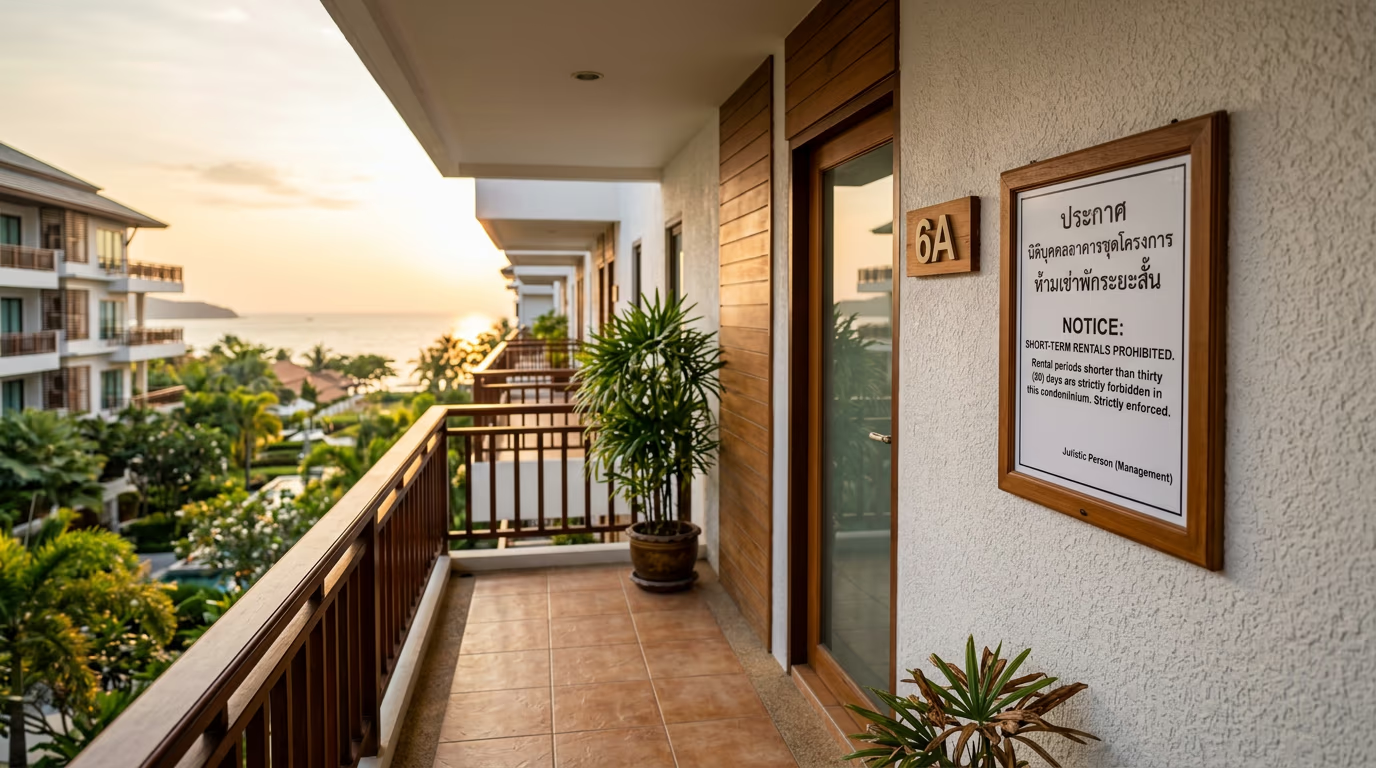
Renting a Thai condominium unit for less than 30 days without a hotel licence is illegal under the Hotel Act B.E. 2547 (2004). Sub-30-day stays are defined as hotel business; a unit owner who lists on Airbnb, Booking.com, Agoda, or any daily-rental platform is operating a hotel. Most Thai condominiums also prohibit short-term rentals in their juristic-person bylaws under Section 32 of the Condominium Act, which is an independent ground to stop the activity even where the Hotel Act is not enforced. The safe, legal structures for a foreign-owned Thai condo are long-term rentals of 30 days or more, ownership in a branded residence with in-house hotel management (which holds the licence), or operating a standalone building under a full hotel or serviced-apartment licence.
The Hotel Act B.E. 2547 (2004) and why it matters
The Hotel Act defines a hotel as accommodation provided for a fee on a temporary basis, and the implementing Ministerial Regulation B.E. 2551 sets the threshold at under 30 days. Anything 30 days or longer is a lease and falls outside the Hotel Act. Anything under 30 days is a hotel and needs a hotel licence issued by the Ministry of Interior.
Section 15 of the Act requires every hotel operator to hold a licence. Section 59 sets the penalty for operating without one: imprisonment up to one year, a fine up to 20,000 THB, or both, plus a continuing fine of up to 10,000 THB per day for each day the violation continues. A unit listed on Airbnb for a full season can accumulate a theoretical six-figure fine before the prosecutor even files.
The Act does not distinguish between a hotel, guesthouse, villa, or condominium unit. If you let it for less than 30 days, it is a hotel. The Supreme Court confirmed this in Dika 1135/2561, upholding the conviction of a Hua Hin condo owner running daily rentals. The argument that a private residence is not a hotel no longer works at the apex court.
A condominium unit almost never qualifies for a hotel licence. Licences require fire-safety clearance, building-code compliance at the whole-building level, a registered hotel manager, separate guest registration (the Tor Ror 30 report to Immigration), and sign-off from the juristic person. That last item is the ceiling most operators cannot get over.
Enforcement in 2025 and 2026
Enforcement is uneven but tightening. Bangkok and Phuket are the most active, Pattaya is driven mainly by civil juristic-person action rather than criminal prosecution, and Chiang Mai is mixed. Platform takedowns, not prosecutions, are the most common outcome — but fines, criminal records, and forced-sale pressure from the juristic person are real and increasing.
The enforcement pattern in 2024-2026 has two main layers.
Local police and district administration. The Royal Thai Police, together with Bangkok Metropolitan Administration district offices and the Department of Provincial Administration outside Bangkok, run periodic sweeps against reported buildings. In Bangkok the Sukhumvit, Phrom Phong, Asok, Ratchadamri, and Silom corridors have been repeat targets since 2023. Operations typically follow a juristic-person complaint or a Thai Hotels Association referral. The standard outcome is a warning, a fine under the Hotel Act, and a demand that the unit stop operating. Repeat offenders draw higher fines and, in a minority of cases, criminal charges. In Phuket, Koh Samui, and to some extent Pattaya, Tourist Police and Immigration treat short-term rental enforcement as partly an immigration matter: guests staying in unregistered accommodation do not appear in the building’s Tor Ror 30 guest report, so hosts face Hotel Act charges and guests can face immigration-reporting breaches. The Phuket News and Bangkok Post have documented the raids through 2024-2025.
Juristic-person civil action. The most effective route and the one most condo owners underestimate. Under Section 32 of the Condominium Act the juristic person can adopt bylaws regulating how units are used, and under Section 49 the bylaws bind every co-owner. A building that has passed a “no rentals under 30 days” bylaw can sue a unit owner for injunction and damages in the Civil Court without involving the Hotel Act at all. In Pattaya several Jomtien, Pratumnak, and Wongamat buildings have secured injunctions through 2023-2025, covered by Pattaya Mail and The Pattaya News. Enforcement at this layer is far more consistent than criminal enforcement; the juristic person does not need police priority, only a committee vote and a Civil Court filing.
Airbnb, Booking.com, and Agoda respond to verified complaints with listing takedowns. A takedown does not carry a fine, but it kills the revenue stream, and replacement listings get flagged faster each cycle.
Juristic-person bylaws: the practical ceiling
Most Thai condominiums that foreigners buy into now prohibit rentals under 30 days in the juristic-person bylaws, adopted under Section 32 of the Condominium Act. The bylaw is enforceable against every unit owner, including foreigners, even if the Hotel Act itself were never applied. This is the real, day-to-day constraint on running Airbnb in a Thai condo.
Section 32 authorises the juristic person to regulate the use of units and common property. A typical modern Thai condominium bylaw reads something like: “Unit owners shall not let their units for periods of less than 30 days without the written consent of the juristic person committee.” Once passed at a co-owners’ meeting with the required quorum, the bylaw binds every unit; current owners, future buyers, and anyone who inherits.
A juristic person that finds a unit running short stays typically escalates through: a written warning citing the bylaw clause and Condominium Act Section 32; restriction of common-area access (pool, gym, lobby keycards, car park) for the unit’s rental guests, which usually ends the practice because an Airbnb guest without pool access writes a bad review and bookings dry up; bylaw fines (commonly 5,000 to 20,000 THB per incident); a Civil Court injunction with damages; and referral to the district police for Hotel Act enforcement.
Pre-2015 buildings need closer due diligence. Older condominiums drafted their bylaws before Airbnb existed and may not have a specific short-stay clause. Most juristic persons in those buildings passed amending resolutions through 2020-2025, but not all. A purchase on an investment thesis should always include reading the current bylaws and the last three annual general meeting minutes for rental-related resolutions. Even in a building with no short-stay bylaw, the Hotel Act still applies. The absence of a juristic-person ban is not a licence to run Airbnb; it only removes one of the two layers of prohibition.
The legal alternatives
Three structures let a foreign condo owner earn rental income lawfully: long-term rentals of 30 days or more, owning a unit in a branded residence with in-house hotel management that holds the licence, or running a full building under a serviced-apartment or hotel licence. Nothing else works cleanly.
Long-term rental (30 days or more)
Any lease of 30 days or more falls outside the Hotel Act. A 30-day booking is legal on its face, whether taken through a traditional broker, a long-stay platform like Blueground, or Airbnb’s own long-stay channel. Juristic-person bylaws generally permit 30-day-plus lets; some require the unit owner to register tenants with the juristic-person office under the immigration Tor Mor 30 tenant notification. Long-term gross rental yields in Thailand cluster at 5-7 percent across the main foreign-buyer markets in 2026 per GlobalPropertyGuide Q1 2026 and the CBRE Thailand outlook.
Branded residences with in-house hotel management
A growing segment of the Thai market is branded-residence condominiums, where a hotel operator manages a unit pool on behalf of participating owners under a single building-level hotel licence. Wyndham Jomtien Pattaya, Ramada Mira North Pattaya, Best Western Nana Bangkok, and several Phuket and Koh Samui projects work this way. Owners buy a freehold or leasehold unit, sign a rental-pool management agreement with the operator, and receive a distribution based on pool performance or guaranteed minimums.
This is legal because the building holds a hotel licence and the operator registers every guest. The owner is not a hotel operator; they are a condominium owner letting the operator use the unit. Yields marketed by these schemes are often higher than long-term rental (7-9 percent guaranteed for an initial term is common), but the structure carries pool dilution, management fees of 25-35 percent of gross, and counterparty risk on any guarantee. Review the pool agreement, not the headline.
Serviced-apartment or hotel licence on a whole building
An owner who controls a full small building can apply for a hotel licence directly. Fire, safety, and building-code requirements apply at the whole-building level, and a designated hotel manager is needed. This route is not available to a single-unit owner in a shared condominium; you cannot licence one condo unit.
What you are actually risking
Running Airbnb in a Thai condo without the building’s hotel licence exposes the owner to: statutory Hotel Act fines, juristic-person fines and injunctions, platform takedowns, a damaged resale record, and — for repeat or high-volume operators — a criminal record. The realistic near-term risk is juristic-person action; the tail risk is a criminal conviction that affects future visas and residency applications.
A realistic risk table for a single foreign-owned unit in 2026:
| Risk | Likelihood | Typical impact |
|---|---|---|
| Platform listing takedown on complaint | High | Revenue cut; replacement listings flagged faster |
| Juristic-person warning and bylaw fines | High in buildings with a short-stay bylaw | 5,000-20,000 THB per incident; common-area access restricted |
| Civil injunction from juristic person | Medium in enforcement-active buildings | Court order to stop; legal costs; future-sale disclosure |
| Hotel Act fine under Section 59 | Medium in Bangkok and Phuket; lower in Pattaya and Chiang Mai | Up to 20,000 THB plus 10,000 THB per continuing day |
| Criminal conviction under Section 59 | Low for a first offence, higher for repeat | Record of conviction affects LTR, retirement visa, and Thai PR applications |
| Resale premium loss | High after any of the above | Buyer due diligence surfaces juristic-person records |
Resale impact is the most commonly missed item. A Thai condo buyer’s lawyer pulls juristic-person records during due diligence. A unit with a logged short-stay dispute, a bylaw fine, or a civil injunction shows up in those records. The next buyer either walks or negotiates a discount. For owners whose exit plan depends on a clean resale, this is often the biggest financial risk.
Cities compared: Bangkok, Pattaya, Phuket, Chiang Mai
Enforcement style and intensity differ by city. Bangkok is Hotel-Act-led and concentrated in tourist corridors. Pattaya is juristic-person-led and particularly active in Jomtien and Wongamat. Phuket is joint enforcement with immigration involvement. Chiang Mai is the lightest regime but tightening under Old City juristic-person pressure.
Bangkok. Active enforcement across Sukhumvit, Asok, Phrom Phong, Thong Lo, Ekkamai, Silom, and Ratchadamri. Bangkok Metropolitan Administration district offices coordinate with the Royal Thai Police and the Thai Hotels Association. Bangkok Post has covered multiple 2024-2025 operations. Juristic persons in premium CBD buildings (The Ritz-Carlton Residences, 98 Wireless, most new Noble, Sansiri, Ananda and Raimon Land towers) have strong short-stay bans and pursue them, and ground-floor check-in desks routinely challenge Airbnb-style arrivals. Guidance: long-term only.
Pattaya. Civil enforcement is the dominant mode. Several Jomtien and Wongamat buildings passed hard short-stay bans from 2022 and pursued injunctions through 2023-2025. Pratumnak and Central Pattaya are mixed, most buildings having moved against. Branded-residence towers with in-house hotel operators (Wyndham, Ramada Mira, Best Western, certain Tulip Group projects) are the main legal short-stay vehicles. Guidance: check the juristic-person bylaws and recent meeting minutes before buying on a short-stay thesis; default to long-term in non-branded buildings.
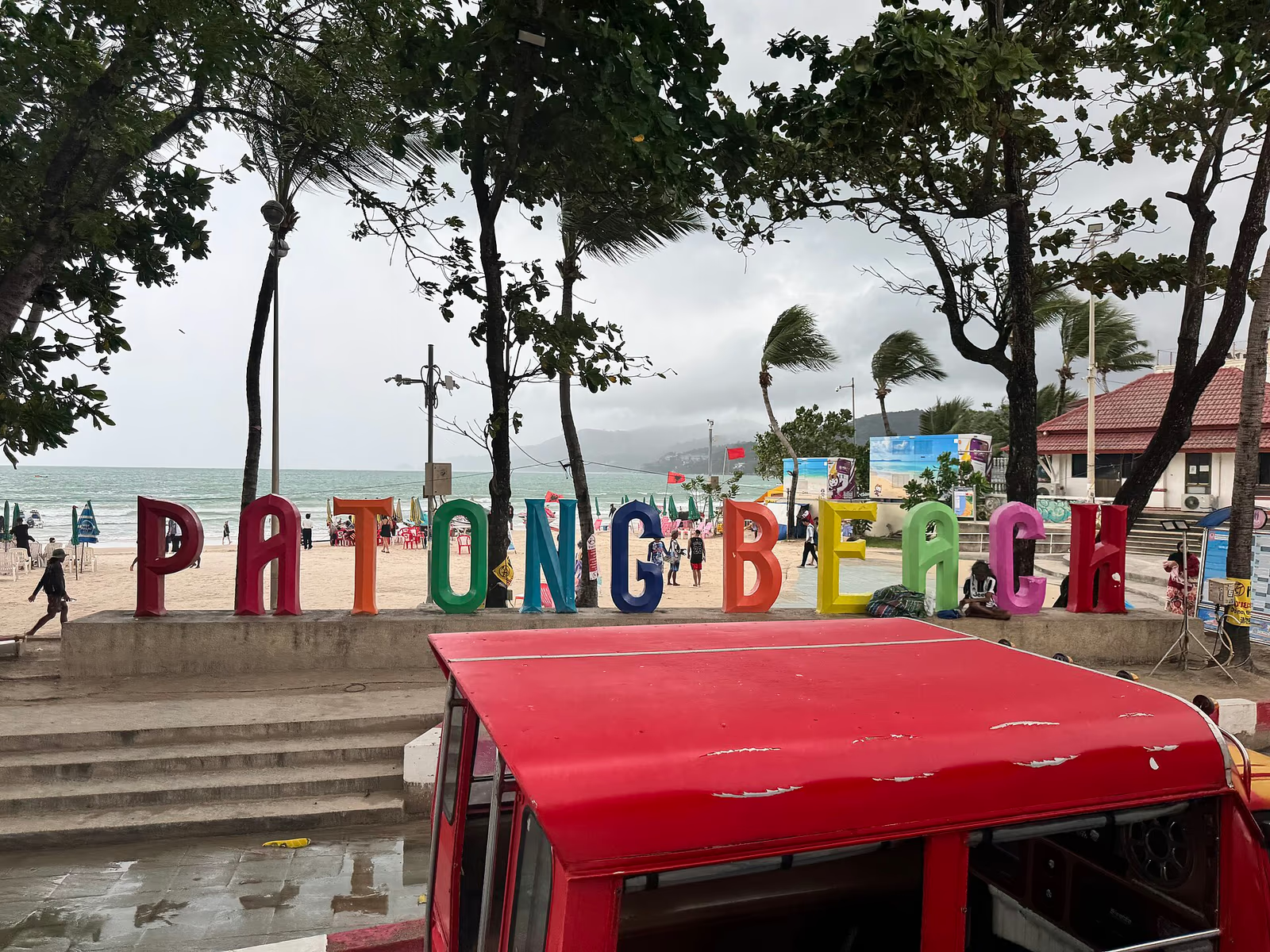
Phuket. Joint operations involving Provincial Hall, Tourist Police, and Immigration. Villa enforcement has been more visible than condo enforcement, but condo enforcement in Patong, Kamala, Bang Tao, and Laguna is rising. Some Phuket resort-format projects hold building-level hotel licences and permit owner-pool short-stay lets; off-licence operation in non-pool units is not allowed. Guidance: only buy for short-stay operation in projects with a documented building-level hotel licence.
Chiang Mai. The lightest regime, but tightening. Old City and Nimmanhaemin juristic persons have been passing short-stay bans through 2024-2025 as digital-nomad inflow pressures long-term rental supply. Lower immediate risk, same structural law. Long-term and monthly stays are the defensible model.
Short-stay versus long-stay yield, adjusted for risk
Gross short-stay yield in prime Thailand tourist corridors can run 8-12 percent in a good year. Net of management (25-35 percent), vacancy, taxes, and legal risk, the risk-adjusted number is rarely above 6 percent — not meaningfully better than a compliant long-term let at 5-7 percent gross, which carries almost no legal risk.
A representative Jomtien one-bedroom, 45 sqm, purchased at 3.5 million THB foreign-quota freehold:
| Scenario | Gross annual rent | Costs | Estimated net |
|---|---|---|---|
| Long-term 12-month lease at 22,000 THB/month | 264,000 THB | 8% agency, maintenance, land tax | 210,000-220,000 THB |
| Short-stay Airbnb, 65% occupancy, 2,600 THB ADR | 616,000 THB | 30% operator, higher utilities, legal risk | 280,000-320,000 in a clean year; 0 if enjoined mid-year |
| Branded-residence rental pool, guaranteed 7% | 245,000 THB | Netted in pool | 245,000 THB |
The right comparator is not the short-stay headline yield but the probability-weighted net including the tail risk of mid-season injunction. See the rental yield guide and yield calculator for a deeper look by building and area.
The future: likely regulatory changes
The Ministry of Tourism and Sports and the National Tourism Policy Committee have been discussing a regulated home-sharing framework since 2023, modelled partly on Japan’s Minpaku law and partly on the Hotel Act’s existing licence structure. As of April 2026 no framework has passed. The direction is toward regulated, registered, tax-collecting short-stay, not blanket liberalisation.
Every draft that has circulated includes mandatory registration of short-stay units with the Ministry of Tourism and Sports or a delegated provincial body, consent of the juristic person as a prerequisite for registration in a condominium (preserving the Section 32 bylaw power rather than overriding it), and local tax collection consistent with the Thai Hotels Association’s long-standing parity demand.
Implication for buyers in 2026: do not buy on the assumption that “this will all be legalised soon.” The policy direction is to formalise a regulated market in which the juristic person remains the gatekeeper for condominiums. A building whose bylaws ban short stays today will almost certainly continue to ban them under any future framework.
Recommendations by buyer profile
The right structure depends on why you are buying.
- Pure investor with a short-stay yield thesis. Buy in a branded-residence with an in-house hotel operator and a building-level hotel licence. Review the pool agreement. Do not buy a standard condo unit on a short-stay thesis.
- Lifestyle owner-occupier with occasional letting. Let on 30-day-plus terms when you are away. Use a long-stay broker or the Airbnb long-stay channel. Expect 5-7 percent gross yield when let.
- Retiree or semi-retired owner. Prioritise the building and neighbourhood for day-to-day life. If you want income, go long-term and avoid the juristic-person dispute.
- Portfolio buyer accumulating multiple units. Concentrate in branded-residence stock or pursue a serviced-apartment licence on a dedicated building. Multiple units running off-licence short-stay in a standard condominium is the profile most likely to draw Hotel Act prosecution.
Related reading: Buying a condo as a foreigner, Freehold vs leasehold, Condo scams to avoid, Best areas to buy in Pattaya, Thailand 2026 market view.
Frequently asked questions
Is Airbnb legal in my Thai condo?
Not for stays under 30 days, unless the building holds a hotel licence that covers your unit’s use. Almost no standard condominiums hold one. Assume short-stay operation is illegal under the Hotel Act and, separately, very likely banned by the juristic-person bylaws.
What if my building’s bylaws allow short-term rentals?
The Hotel Act still applies. Bylaw permission removes one layer of prohibition; the statutory under-30-day rule remains. The building still needs a hotel licence.
Can I run Airbnb if my Thai spouse owns the unit?
No. The Hotel Act and the juristic-person bylaws apply to the unit, not the owner’s nationality.
What counts as a “30-day” stay?
At least 30 consecutive nights under one booking to one guest party. A sequence of shorter bookings does not aggregate into a 30-day stay. Ministerial Regulation B.E. 2551 sets the threshold per stay.
Is a “serviced apartment” the same as a condo with Airbnb?
No. A serviced apartment building operates under a non-hotel serviced-apartment or full hotel licence, issued to the building and its operator. Individual condo units running short stays are not serviced apartments in the legal sense.
Has anyone actually been prosecuted?
Yes. The Supreme Court’s Dika 1135/2561 decision upheld the conviction of a condo owner running daily rentals in Hua Hin. District-level fines and juristic-person injunctions are now the more common outcomes, with prosecutions reserved for repeat and high-volume operators.
Does removing my listing from Airbnb fix the problem?
It reduces visibility and new bookings but does not cure past breaches. The juristic person can still act on the bylaw breach, and the Hotel Act treats each operating day as a violation. A clean exit usually means stopping short stays, returning to long-term letting or personal use, and settling with the juristic person in writing where a dispute has arisen.
Will Thailand legalise Airbnb in condos?
Policy direction is toward regulated, registered, tax-collecting short stays, not blanket legalisation. Every draft framework since 2023 preserves the juristic-person veto through Section 32 of the Condominium Act.
How do I know what my building allows?
Read the current juristic-person bylaws (kot khor bangkhab), the last three years of annual general meeting minutes, and any house rules distributed at check-in. A Thai-qualified lawyer or a buyer’s agent should pull these before you sign a reservation agreement on an investment-thesis purchase.
What is the safest short-stay investment structure?
A freehold or leasehold unit in a branded-residence condominium whose building-level hotel licence covers the rental-pool programme. The operator carries the Hotel Act compliance. Review the pool agreement and the operator’s balance sheet, not only the headline guaranteed yield.
References
Sources
- 01Hotel Act B.E. 2547 (2004), Section 4 (definition of hotel) and Section 15 (licence requirement) · https://www.krisdika.go.th/librarian/get?sysid=443811&ext=pdfAccommodation let for periods shorter than 30 days is classified as a hotel business and requires a hotel licence under the Hotel Act. Accessed 2026-04-16.
- 02Hotel Act B.E. 2547 (2004), Section 59 · https://www.krisdika.go.th/librarian/get?sysid=443811&ext=pdfOperating a hotel business without a licence is punishable by imprisonment up to one year or a fine up to 20,000 THB, plus a continuing fine of up to 10,000 THB per day. Accessed 2026-04-16.
- 03Condominium Act B.E. 2522 (1979) as amended by Act (No. 4) B.E. 2551 (2008), Section 32 and Section 49 · https://www.krisdika.go.th/librarian/get?sysid=443975&ext=pdfA condominium juristic person may adopt bylaws and regulations governing the use of units and common property. Accessed 2026-04-16.
- 04Supreme Court of Thailand Decision No. 1135/2561 (Dika 1135/2018) — short-term condo rental case · https://deka.supremecourt.or.th/Supreme Court ruling upholding a Hua Hin condominium owner's conviction for operating daily rentals without a hotel licence, confirming that sub-30-day condo rentals fall within the Hotel Act. Accessed 2026-04-16.
- 05Ministerial Regulation Prescribing Types and Rules of Hotel Business B.E. 2551 (2008), issued under the Hotel Act · https://www.ratchakitcha.soc.go.th/Ministerial Regulation defining non-hotel short-stay accommodation and specifying that monthly rentals (30 days or more) are exempt from the hotel licence requirement. Accessed 2026-04-16.
- 06Thai Hotels Association, Position Paper on Illegal Short-Term Accommodation 2025 · https://www.thaihotels.org/Thai Hotels Association 2025 industry position calling for enforcement against unlicensed condominium short-stay operators and equal tax treatment across accommodation providers. Accessed 2026-04-16.
- 07Tourism Authority of Thailand, Safe Stay and Registered Accommodation Guidance 2025 · https://www.tourismthailand.org/Tourism Authority of Thailand 2025 campaign promoting registered accommodation and consumer guidance on verifying hotel licences. Accessed 2026-04-16.
- 08Bangkok Post, Authorities crack down on illegal short-term condo rentals, coverage 2024-2025 · https://www.bangkokpost.com/Bangkok Metropolitan Administration and Royal Thai Police enforcement operations against illegal daily condo rentals in Sukhumvit and Ratchadamri corridors, 2024-2025. Accessed 2026-04-16.
- 09The Phuket News, Phuket short-term rental enforcement coverage 2024-2025 · https://www.thephuketnews.com/Phuket Provincial Hall 2024-2025 joint operations with Immigration and Tourist Police targeting unlicensed villa and condo short-stay operators. Accessed 2026-04-16.
- 10The Pattaya News / Pattaya Mail, coverage of juristic-person injunctions against short-term-rental unit owners 2023-2025 · https://thepattayanews.com/Pattaya juristic persons increasingly obtaining civil injunctions against co-owners running daily rentals, supported by condominium bylaws adopted under Condominium Act Section 32. Accessed 2026-04-16.
- 11Ministry of Tourism and Sports, National Tourism Policy Committee discussion papers 2024-2026 · https://www.mots.go.th/Thailand Board of Investment and Ministry of Tourism and Sports proposals to create a regulated home-sharing framework with mandatory registration, safety standards, and local tax collection. Accessed 2026-04-16.
- 12Siam Legal International, Hotel Act and Short-Term Rentals in Thailand · https://www.siam-legal.com/realestate/hotel-act-thailand.phpSiam Legal analysis of the Hotel Act and short-term rental liability for condominium owners in Thailand. Accessed 2026-04-16.
- 13Tilleke & Gibbins, Condominium Bylaws and Short-Term Rental Regulation in Thailand · https://www.tilleke.com/Tilleke & Gibbins briefing on condominium juristic-person powers to regulate short-term rentals and the legal standing of such bylaws. Accessed 2026-04-16.
Published · How we research and date our content